
I Watched Russell Brunson’s AI Secrets Challenge — Here’s My Honest Review
 Reading Time: 17 minutes
 AI Secrets Challenge Review Summary
Marketers, agency owners, creators, and SaaS-focused entrepreneurs
People expecting instant money or pure coding training
Yes — access to core multi-day training sessions
Optional paid upgrade with deeper implementation training
MarketingSecrets.ai Platinum
$2,997 one-time payment
If you have been seeing ads, emails, YouTube videos, or social media posts about the “AI Secrets Challenge” by Russell Brunson, Founder of ClickFunnels, then you are probably wondering the same thing I was: Is this challenge actually valuable, or is it just another hyped-up AI marketing event trying to sell expensive software?
After going through the full 5-day training and reviewing the final sales presentation carefully, I wanted to write a detailed review from the perspective of someone who has been in the digital marketing and affiliate marketing industry for 17+ years.
This is not a surface-level review.
I analyzed the messaging, the teaching style, the business model, the frameworks, the emotional triggers, and the actual practical value being delivered inside the challenge.
And honestly, I have mixed thoughts.
Some parts were genuinely eye-opening. Some parts were heavily emotional and sales-driven. And some parts felt much smarter than what most AI “gurus” are currently teaching online.
So in this review, I will break down:
- What the AI Secrets Challenge actually teaches
- What happens on each day
- What I personally liked
- What I did not like
- Whether beginners can benefit
- Whether experienced marketers can benefit
- The psychology behind the challenge
- My thoughts on the final offer
- Whether the challenge is worth your time and money
Let’s get into it.
What Is the AI Secrets Challenge?
The AI Secrets Challenge is a multi-day online training event hosted by both co-founder of ClickFunnels – Russell Brunson & Todd Dickerson.
The challenge is designed around one central idea. Instead of using AI just to create content, use AI to build recurring-revenue software businesses. That is the core positioning. And to be fair, this immediately separates the challenge from most generic AI trainings online.
Most AI courses today focus on:
- Writing blog posts with ChatGPT
- Creating AI images
- Generating social media captions
- Making YouTube scripts
- Basic prompt engineering
But this challenge takes a very different direction. Russell repeatedly pushes the idea that:
“Information alone is becoming commoditized.”
Throughout the training, he explains that the future belongs to people who can combine:
- Frameworks
- AI
- Software
- Recurring revenue
- Distribution
And honestly, this part was extremely interesting. Instead of teaching people to become “AI freelancers,” the challenge tries to shift participants toward becoming AI-powered business owners. That positioning alone makes the challenge stand out.
My First Impression After Watching Day 1
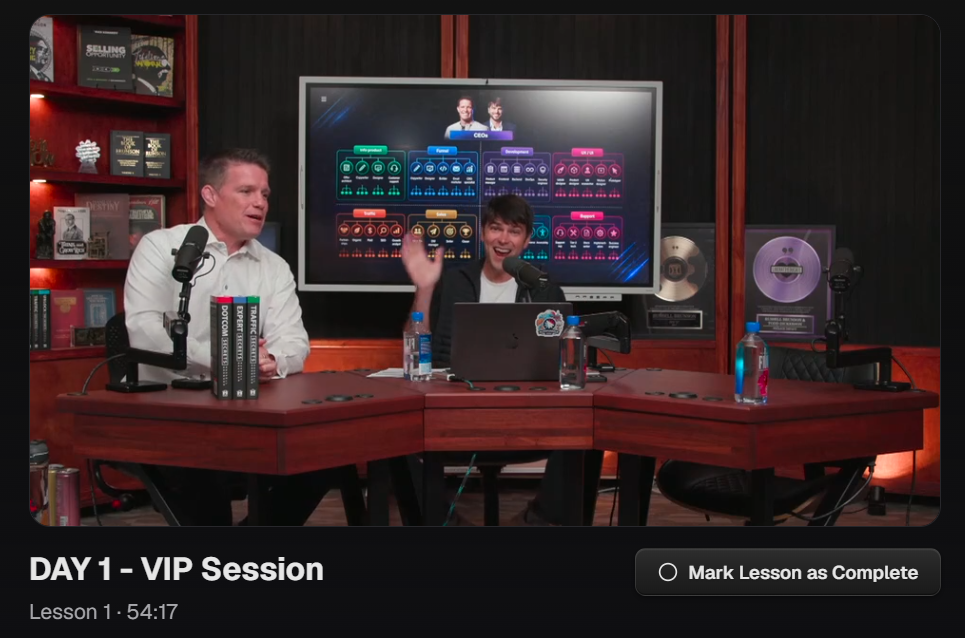
Day 1 starts with extremely high energy.
Russell Brunson is a very polished presenter. Whether someone likes him or not, it is hard to deny that he understands audience psychology at a very advanced level.
Within the first few minutes, he creates curiosity, urgency, and excitement.
One thing that immediately caught my attention was the use of AI voice calling systems.
Participants reportedly received conversational AI phone calls before the event started.
That was actually smart marketing.
Instead of only talking about AI, they demonstrated AI.
And psychologically, that increases authority immediately.
The first day mainly focuses on helping people believe that:
- AI is changing business faster than most people realize
- Traditional information businesses are becoming weaker
- The future belongs to people who can turn frameworks into tools and software
This is an important distinction.
Russell repeatedly emphasizes that people are not really buying “information.”
They want:
- outcomes
- automation
- implementation
- shortcuts
- systems
And that idea is honestly very accurate.
You can disagree with the hype, but the overall direction of the market is moving this way.
Day 2: The Most Valuable Training in the Entire Challenge
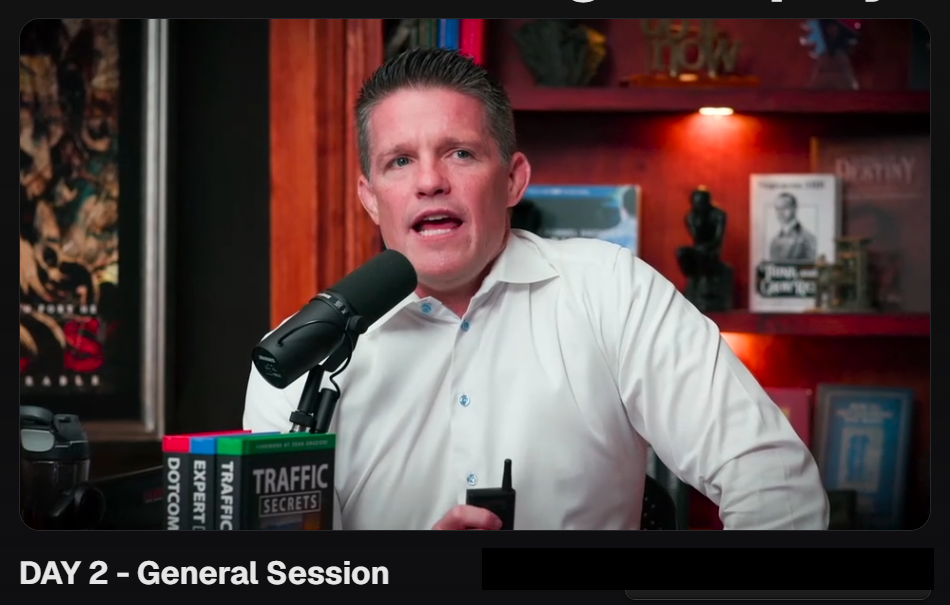
In my opinion, Day 2 was probably the strongest part of the entire challenge. This is where the teaching became more strategic and less motivational.
Russell introduced three concepts repeatedly:
1. Swipe Files
This was one of the smartest discussions in the challenge.
Instead of letting AI randomly generate mediocre content, he explains that you should feed AI proven frameworks, proven copywriting, proven funnels, and proven messaging. That is actually how serious marketers use AI. Beginners often think AI magically creates brilliance from nothing.
Experienced marketers know that: AI becomes far more powerful when guided using proven data, proven copy, proven structures, and proven psychological frameworks. This section alone probably gave more practical value than many paid AI courses currently online.
2. Attractive Character
Russell Brunson has taught this concept for years. The idea is simple: People connect with personalities more than brands. Even in the AI era, human positioning still matters. This is another point where the challenge becomes deeper than generic “make money with AI” content.
Instead of saying: “Just automate everything.”
The challenge argues that:
- your stories matter
- your positioning matters
- your personality matters
- your frameworks matter
- your experiences matter
AI amplifies identity. It does not replace identity. That is a very important distinction.
3. Creative Direction
This part was honestly underrated. Russell explains that AI still needs strategic direction. Without context, storytelling, positioning, and emotional framing, AI-generated content feels generic. And this is true.
Most AI content online today sounds robotic because there is no strategic human input behind it. The challenge repeatedly pushes the idea that the real advantage is not AI itself. The real advantage is: Human strategy + AI execution. And I completely agree with that.
Day 3: The Big Shift From Courses to Software
Day 3 is where the challenge becomes very ambitious.
Russell Brunson openly says that:
- courses are becoming commoditized
- software alone is also becoming commoditized
- the real opportunity is combining frameworks with software
This was probably the core philosophical idea of the entire challenge. And honestly, this concept deserves attention.
For years, most online entrepreneurs sold:
- PDFs
- ebooks
- courses
- coaching
- webinars
- memberships
But AI is making basic information cheaper and easier to generate. So the challenge argues that future businesses need:
- implementation
- automation
- recurring value
- systems
- tools
- operational software
Russell repeatedly references how ClickFunnels itself was created by turning marketing frameworks into software.
Whether someone likes ClickFunnels or not, that business model obviously worked. And this is where the challenge starts becoming more strategic than motivational.
Instead of saying: “Use AI to make Instagram posts.” The challenge pushes people toward: “Use AI to create scalable systems.” That is a much more sophisticated business conversation.
Day 4: Marketing Psychology
Day 4 focused heavily on marketing systems. This was less about AI tools and more about business architecture. Russell discusses:
- multiple front-end offers
- email marketing
- soap opera sequences
- Seinfeld email sequences
- recurring messaging angles
- selling the same core offer through different entry points
If you are already familiar with direct response marketing, none of this will feel new. But for beginners, this day was probably very valuable. One important thing I noticed: The challenge is not really just about AI. It is actually a marketing challenge disguised as an AI challenge. And I mean that positively. The deeper lesson throughout all 5 days is really about:
- positioning
- recurring revenue
- offers
- messaging
- market sophistication
- systems
- distribution
- productization
AI is the accelerator. But marketing is still the foundation. That is something many beginners may not fully realize while watching.
Day 5: AI App Building
Day 5 was the most emotionally exciting day of the challenge.
This is where Russell heavily pushes the idea that: “Now anyone can become a software creator.” The demonstrations around AI-powered app building were impressive. The overall message was: You no longer need massive technical skills to create useful tools.
Now, realistically speaking, I think this message is partly true and partly exaggerated. Yes, AI tools have dramatically lowered technical barriers. Yes, no-code and AI-assisted app development are becoming much easier. But beginners should still understand:
Building profitable software businesses still requires:
- positioning
- customer understanding
- distribution
- marketing
- problem solving
- retention
- support
- offer strategy
The challenge occasionally makes things sound easier than they really are. That is something viewers should keep in mind. However, I will say this: The challenge does a very good job of expanding people’s thinking. Many people watching probably entered the event thinking: “Maybe I can use AI to write content.”
But by Day 5, they are thinking: “Maybe I can build systems, tools, automations, or recurring products.” That mental shift is actually valuable.
Pros of the AI Secrets Challenge 👍
The biggest strength is not the AI tools. It is the business model shift. Russell Brunson repeatedly pushes participants away from:
- one-time income
- random freelancing
- low-value commodity services
And toward:
- recurring revenue
- software models
- scalable systems
- frameworks
- implementation tools
- ecosystem businesses
That is the smartest part of the entire challenge. A lot of AI educators online are teaching tactical tricks. This challenge tries to teach strategic positioning. That makes it far more interesting than most low-level AI trainings.
What I Personally Did Not Like 👎
Now let’s talk honestly about the negatives.
Because no review should only focus on hype.
1. Heavy Emotional Selling
The challenge is extremely sales-oriented. Now, to be fair, Russell Brunson has always been a direct-response marketer. So this should not surprise anyone. But viewers should understand: Every challenge day is strategically designed to increase emotional momentum. The structure follows a classic funnel psychology pattern:
- excitement
- possibility
- identity shift
- urgency
- future pacing
- emotional vision
- opportunity framing
- offer transition
This is very sophisticated marketing. Some people will feel inspired. Others may feel overwhelmed.
2. Some Claims Feel Over-Simplified
At times, the challenge makes software creation sound almost instant. Statements like: “Anyone can build apps now.” …are directionally true but practically incomplete. AI lowers barriers. It does not eliminate business complexity. Many beginners may underestimate:
- competition
- customer acquisition
- retention
- technical maintenance
- support systems
- scaling challenges
So I think viewers should remain realistic.
3. Beginners May Feel Information Overload
The pacing is very fast. There is a huge amount of energy, concepts, positioning, and future-focused thinking packed into each session. For experienced marketers, this feels exciting. For complete beginners, it may feel overwhelming.
Especially if someone has never:
- built funnels
- sold products
- run email campaigns
- created offers
- worked with automation
The challenge assumes a certain level of entrepreneurial thinking.
My Thoughts on the Final Offer
The final offer presentation was exactly what I expected from a Russell Brunson funnel.
Very polished. Very emotionally driven. Very layered. Very bonus-heavy. The central sales angle is this: Upgrade from “dabbling” with AI to fully committing to building AI-powered systems and software businesses.
The pitch repeatedly positions the buyer as someone standing at a major business transition point. Psychologically, this is powerful. The offer also smartly addresses multiple business types:
- agencies
- network marketers
- coaches
- educators
- influencers
- fitness experts
- niche creators
The core message becomes: “Whatever your expertise is, turn your frameworks into software.”
And honestly? That is actually a smart positioning framework. Because it makes the opportunity feel customizable.
However, buyers should remain realistic. Software businesses are not magic. Recurring revenue is attractive, but:
- customer acquisition still matters
- product quality still matters
- retention still matters
- support still matters
- differentiation still matters
The challenge occasionally creates the emotional feeling that AI alone guarantees success.
It does not. Execution still matters enormously.
Is the AI Secrets Challenge Legit?
Yes. I would say the challenge is 100% legitimate.
But that does not automatically mean every participant will succeed. There is a difference. The challenge contains:
- real marketing strategy
- real positioning concepts
- real business model discussions
- real recurring revenue thinking
- real AI implementation ideas
This is not one of those completely fake “push button riches” webinars. At the same time, viewers should understand that the event is heavily optimized for selling a larger ecosystem. So the training and the sales process are deeply connected. That is important to understand before upgrading.
Who Will Benefit Most From This Challenge?
In my opinion, the people who will benefit the most are:
Existing Marketers
If you already:
- run funnels
- build audiences
- sell services
- do affiliate marketing
- run coaching businesses
- understand offers
…then this challenge can genuinely expand your thinking. Especially around recurring revenue and AI-powered implementation.
Agency Owners
Agencies can probably benefit significantly from the “framework into software” concept. That business model shift is actually very powerful.
Coaches and Course Creators
This audience may benefit from understanding how AI can help transform static information into more interactive implementation systems.
Entrepreneurs Who Think Long-Term
People looking to build:
- systems
- SaaS-style businesses
- recurring revenue models
- automation ecosystems
…will probably resonate strongly with the challenge philosophy.
Who May Not Benefit Much?
People Looking for Instant Money
If someone expects: “Watch 5 videos and become rich instantly.” …they will probably be disappointed. Because despite the hype, execution still matters.
People Who Hate Marketing
This challenge is deeply rooted in marketing psychology. If someone dislikes:
- funnels
- sales psychology
- positioning
- offers
- email marketing
- persuasion
…then they may not enjoy the experience.
People Wanting Pure Technical AI Training
This is not a hardcore technical AI engineering course.
It is more: AI + business strategy + marketing psychology + recurring revenue positioning. That distinction matters.
Pricing Breakdown: Free vs VIP vs Platinum Offer
One thing I appreciated about the AI Secrets Challenge is that the funnel is actually very transparent once you go through the entire process.
Here’s the simple breakdown for anyone wondering what happens after signing up.
| Feature | Free Challenge | VIP | Platinum |
|---|---|---|---|
| Core Training | Yes | Yes | Yes |
| Bonus Sessions | No | Yes | Yes |
| Implementation Help | Limited | More | Advanced |
| Price | Free | Paid Upgrade | $2,997 |
1. Free AI Secrets Challenge
The main challenge itself is free to join.
You get access to the multi-day training sessions where Russell Brunson teaches:
- AI business positioning
- recurring revenue concepts
- software-style business models
- funnels and marketing psychology
- AI-powered implementation ideas
Honestly, even the free training contains some valuable mindset and strategy shifts, especially for marketers, agency owners, and creators trying to understand where AI business models are heading.
If you only attend the free sessions, you can still learn quite a bit.
2. VIP Upgrade (Free for 14 days then $97/month)

During the challenge, participants are offered a VIP upgrade.
The VIP version mainly focuses on deeper implementation and additional access.
This includes things like:
- bonus training
- extra sessions
- implementation help
- community-style access
- more advanced breakdowns
From what I observed, the VIP upgrade is designed more for people who want to take action seriously instead of casually watching the challenge.
Personally, I think the VIP option makes the most sense for:
- marketers
- agency owners
- funnel builders
- creators already selling online
- people actively trying to build something
For complete beginners, the free challenge may already be enough initially.
3. Final Platinum Offer ($2,997)
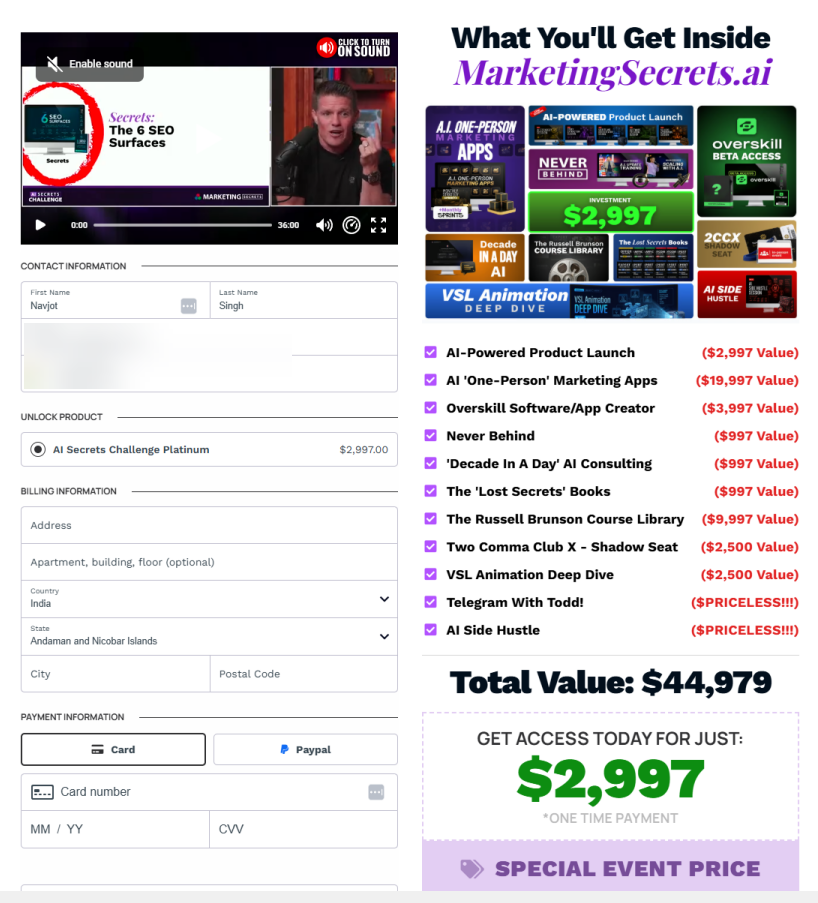
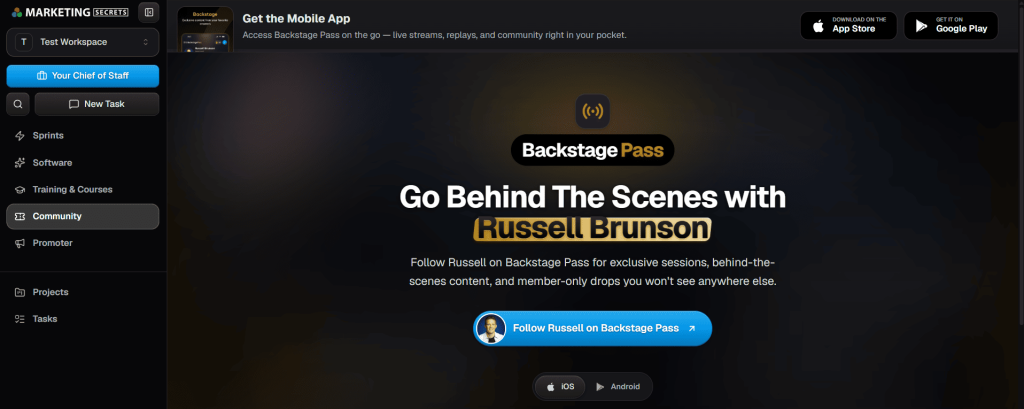
At the end of the funnel, there is a higher-level offer called: MarketingSecrets.ai Platinum
The event pricing shown during the checkout process was $2,997 one-time payment.
The offer includes multiple trainings, frameworks, software-related systems, implementation resources, and bonus programs bundled together.
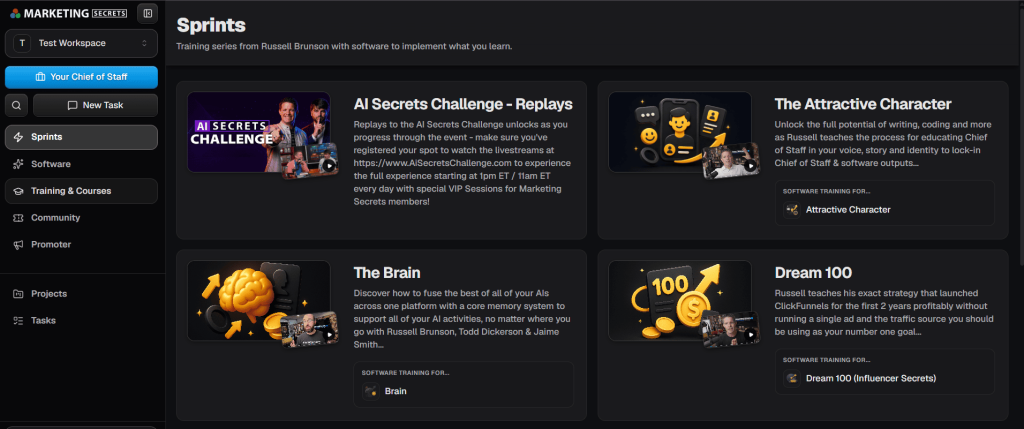
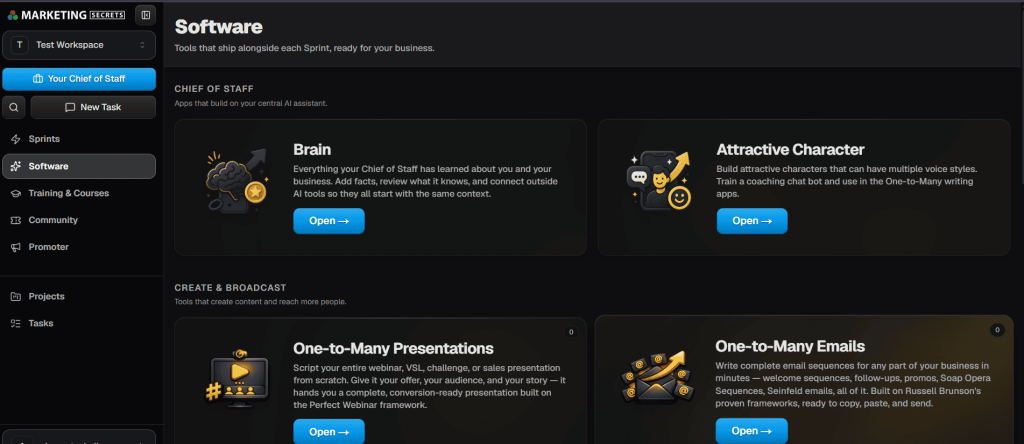
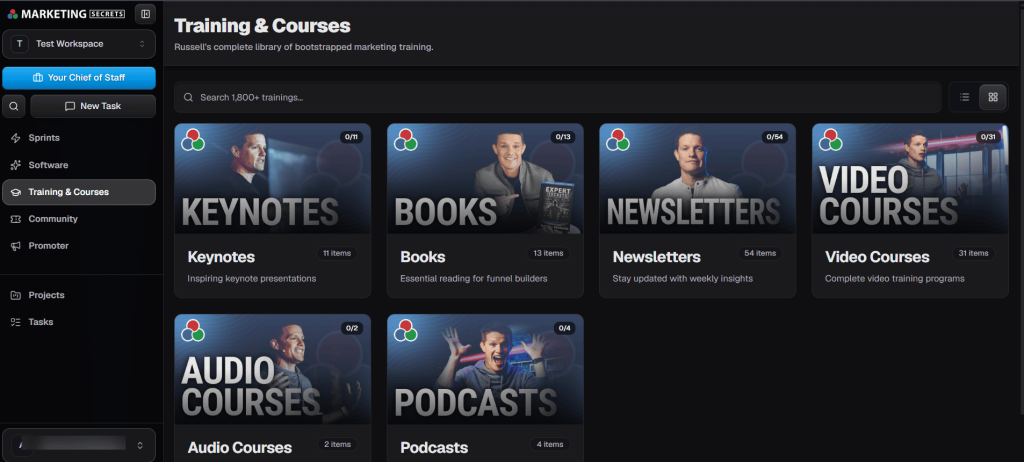
Now honestly, this is where people should think carefully and realistically. I do NOT think someone should buy the Platinum offer just because they feel emotionally excited during the event.
Instead, I think it makes sense mainly for people who:
- already understand online business
- are serious about implementation
- want to build recurring revenue models
- are interested in SaaS or AI-powered systems
- are willing to invest time executing the strategies
For beginners with no clear direction yet, I personally think the free challenge and possibly the VIP upgrade are enough to start learning first.
That’s probably the most honest advice I can give after reviewing the full funnel carefully.
If you’re curious, I’d still recommend joining the free challenge first and watching the training yourself before making any bigger decision.ng may feel reasonable. If not, even a lower price would probably feel expensive later.
Should You Join the AI Secrets Challenge?
If you are:
- interested in AI business models
- fascinated by recurring revenue
- curious about SaaS-style positioning
- already involved in marketing or online business
- looking for bigger opportunities beyond freelancing
…then yes, the challenge is worth watching.
Even if you do not buy the final offer, the strategic discussions alone can expand your thinking. However, if you are expecting:
- overnight success
- effortless passive income
- instant software empires
…then you should lower expectations and approach it with a business mindset instead of emotional hype.
Because ultimately, AI is still just a tool. The people who win long term will still be the ones who:
- understand markets
- understand people
- understand positioning
- understand distribution
- understand execution
And ironically, that is probably the biggest truth the challenge accidentally reveals.
My Final Verdict
After reviewing the entire AI Secrets Challenge carefully, I would summarize it like this:
The challenge is much smarter than most AI courses currently flooding the market. Instead of teaching shallow AI tricks, it pushes people toward:
- recurring revenue
- systems thinking
- software positioning
- implementation tools
- scalable business models
And that part deserves credit.
At the same time, the event is also highly emotional, highly persuasive, and intentionally designed to move viewers toward a larger paid ecosystem. So viewers should enter with both:
- excitement
- realistic expectations
Personally, I think the most valuable lesson from the entire challenge was this:
The future advantage may not belong to people who simply “use AI.”
It may belong to people who combine human frameworks, positioning, and strategic thinking with AI-powered execution.
That is the real lesson hidden underneath all the hype. And honestly, that insight alone makes the challenge worth studying.
My Final Advice
If you’re curious about AI business models, funnels, recurring revenue, automation, or SaaS-style opportunities, I genuinely think the free challenge is worth attending first.
Even if you never buy anything, the challenge can still expand your understanding of where online business and AI-powered marketing are heading.
Frequently Asked Questions (FAQ)
Is AI Secrets Challenge just another AI content course?

No, and this is probably the biggest difference I noticed while reviewing the challenge carefully.
Most AI courses online focus mainly on:
– prompts
– AI writing
– image generation
– content automation
But AI Secrets Challenge is more focused on using AI to build:
– systems
– recurring revenue models
– implementation tools
– software-style businesses
– automated marketing workflows
The overall positioning feels much more business-focused than content-focused.
Is the challenge mainly about software and automation?
Partly, yes. A major theme throughout the challenge is turning marketing frameworks into AI-powered implementation systems.
Instead of only teaching theory, the training repeatedly focuses on:
– automation
– execution
– scalability
– recurring revenue
– software-style leverage
That’s one reason the challenge feels different from many beginner-level AI trainings online
What is the difference between the AI Secrets Free Challenge and VIP Upgrade?
The free challenge gives access to the core multi-day training sessions.
The VIP upgrade adds:
– deeper implementation training
– bonus sessions
– additional resources
– advanced breakdowns
– more guided learning
Personally, I think the free challenge is enough for people who simply want to explore the concepts first.
The VIP option makes more sense for people who already know they want to implement the strategies seriously.
How much does the final Platinum offer cost?
During the checkout process, the final premium offer called MarketingSecrets.ai Platinum was priced at $2,997 one-time payment. The offer included multiple trainings, systems, implementation frameworks, software-related resources, and bonus programs.
Does AI Secrets Challenge teach technical AI development?
Not really. This is more of:
– AI + marketing
– AI + business systems
– AI + recurring revenue
– AI + implementation strategy
It is not a deep technical coding or AI engineering course. The focus is much more on business leverage and marketing systems.
Why does the challenge focus so heavily on recurring revenue?
Because the core business philosophy behind the challenge is that one-time income is becoming less stable in the AI era.
Throughout the training, Russell Brunson repeatedly emphasizes:
– recurring revenue
– software-style business models
– implementation systems
– automation
– scalability
That recurring revenue angle is one of the central ideas behind the entire challenge.
